Plan
When to go to Porto de Galinhas: weather, rain and tides
September to March is usually drier; April to July brings most of the rain. But it is the tide that rules the trip to the pools.
Updated on October 5, 2026 ✓ Information checked on October 5, 2026 adapted from the Portuguese original
Porto de Galinhas is hot all year round, but the trip changes quite a bit between the dry and the rainy season. Besides the weather, two factors matter: the tide, which decides the trip to the natural pools, and the calendar, which sets prices and crowds.
Dry season and rainy season
Ipojuca (the municipality Porto de Galinhas belongs to) has no climate normals of its own published by INMET, Brazil’s national weather institute. The nearest reference station is Recife, about 60 km away. The figures below come from INMET’s 1991-2020 Climate Normals for that station.
| Month | Average rainfall (mm) | Rainy days | Average high (°C) |
|---|---|---|---|
| Jan | 106.6 | 11 | 30.8 |
| Feb | 127.0 | 11 | 31.0 |
| Mar | 197.2 | 15 | 30.9 |
| Apr | 268.9 | 17 | 30.4 |
| May | 317.1 | 19 | 29.6 |
| Jun | 390.5 | 22 | 28.5 |
| Jul | 314.8 | 23 | 27.9 |
| Aug | 186.7 | 19 | 27.9 |
| Sep | 93.3 | 12 | 28.6 |
| Oct | 52.8 | 9 | 29.6 |
| Nov | 39.0 | 7 | 30.4 |
| Dec | 61.6 | 8 | 30.8 |
The pattern is clear. April to July bring most of the rain, peaking in June. September to February are the driest months, with the minimum in November. Temperatures vary little: average highs range from 28 °C to 31 °C (roughly 82 °F to 88 °F).
APAC, the state water and climate agency, publishes forecasts and rainfall bulletins for Pernambuco. Check its website close to your travel date, because a historical average is not a forecast.
The tide matters more than the month
The natural pools appear at low tide, and Ipojuca City Hall recommends visiting in the morning and checking the tide table first. That applies in any season. A week in January with afternoon low tides can be less rewarding than a week in September with morning low tides.
So, once you have chosen the month, open the tide table and look for days with low tide in the morning, ideally around the full moon or new moon, when low tides are usually more pronounced.
High and low season
| Period | What to expect |
|---|---|
| December to February | Brazilian summer holidays, New Year’s Eve and Carnival. Bigger crowds and higher room rates |
| March and August to November | Fewer crowds outside public holidays. A good balance between weather and price |
| April to July | More rain. July has school holidays, which keeps demand up |
| Long holiday weekends | Full in any month. Book well ahead |
Ipojuca City Hall does not publish an official high-season calendar. The table describes the usual pattern for beach destinations in Brazil, driven by school holidays and national public holidays. Check the dates of Carnival and public holidays for the year of your trip.
Who should choose each season
- First trip, focused on the pools: September to March, with dates checked against the tides.
- Tight budget: months outside school holidays and public holidays, such as September, October and November.
- Families with school-age children: July or January, knowing it will be busier. See Porto de Galinhas with kids.
- Traveling in the rainy season: it works if you are flexible. Have a plan B ready, like those suggested in Porto de Galinhas on rainy days.
What about the wind?
The Pernambuco coast gets steady sea breezes, which help ease the heat. On very windy days, the water can be rougher and less clear, even at low tide. That is why the final word on the trip to the pools always belongs to the jangadeiros (raft boatmen), who assess the sea on the day.
Summary
If you can choose, go for the drier season, from September to March, and avoid peak school holidays and public holidays to pay less. In any month, it is the tide that decides the best day for the outing. To finalize your budget for the season you choose, see trip cost.
Frequently asked questions
What is the rainiest month near Porto de Galinhas?
In INMET's 1991-2020 climate normals for Recife, the nearest reference station, June is the rainiest month, with about 390 mm, followed by May and July.
What is the driest month?
November, with about 39 mm of rain on INMET's 1991-2020 average for Recife. October and December are also among the driest.
Is it worth going in the rainy season?
It can be, if you are flexible. Rain comes in showers, with sunny spells in between. On the other hand, visibility in the natural pools tends to drop after heavy rain, so it is good to have a plan B.
Does the sea get cold in any month?
According to Ipojuca City Hall, the water is pleasant all year round, usually around 27 °C (about 81 °F).
Keep reading
Keep planning
-
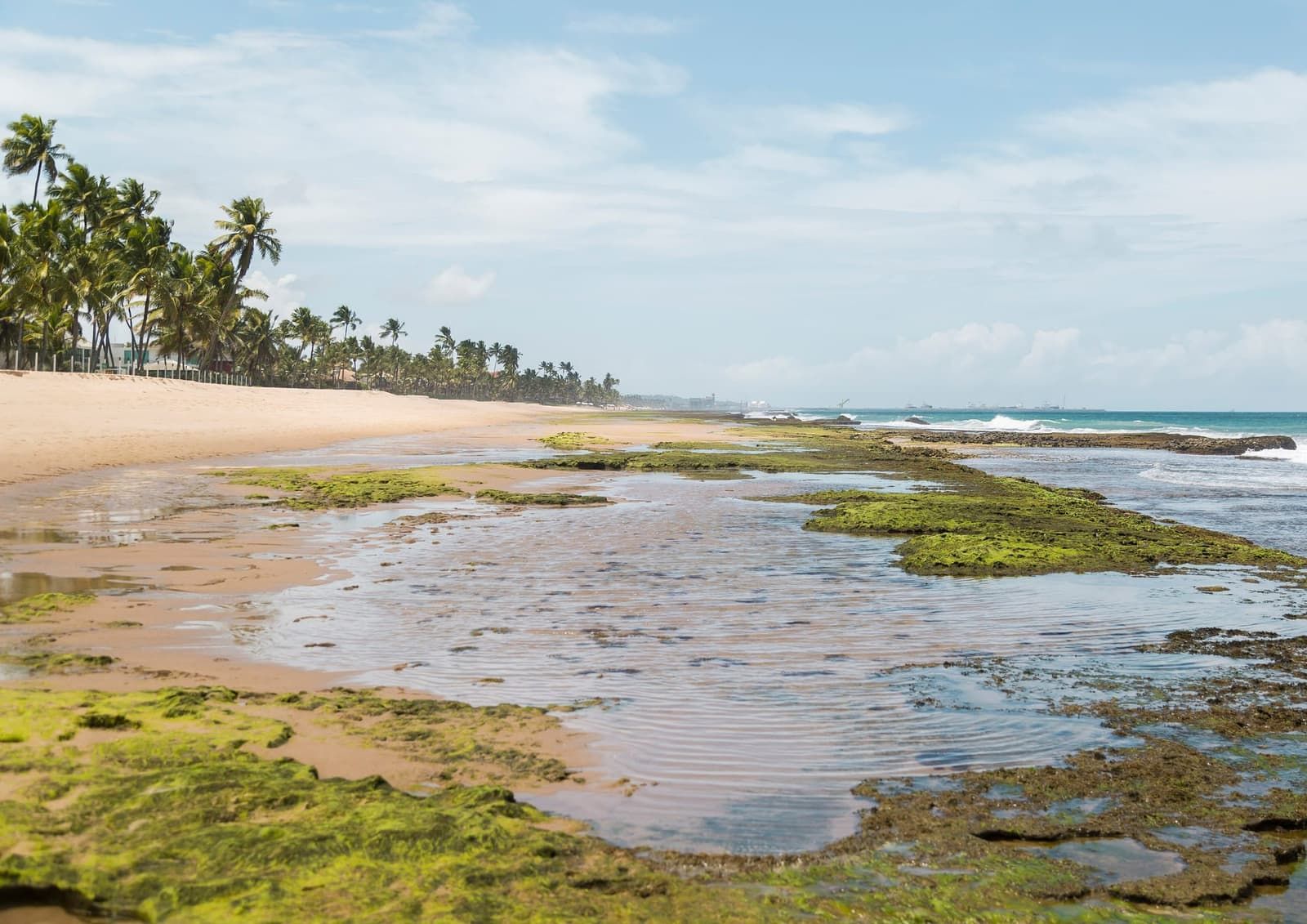 Porto de Galinhas tide table: how to read it and where to check Understand high tide, low tide and tide height, and use the official Navy forecast to choose your day for the natural pools. Read guide
 -
 Porto de Galinhas on rainy days: what to do Rain in Porto de Galinhas usually comes in showers. See how to rearrange your day and what to do when the weather turns. Read guide
 -
 How much does a trip to Porto de Galinhas cost: complete price guide Transport, outings, beach stalls, restaurants and small fees, with what has a set price and what varies. Plus how much to set aside per person per day for three travel styles. Read guide