Plan
Porto de Galinhas tide table: how to read it and where to check
Understand high tide, low tide and tide height, and use the official Navy forecast to choose your day for the natural pools.
Updated on October 5, 2026 ✓ Information checked on October 5, 2026 adapted from the Portuguese original
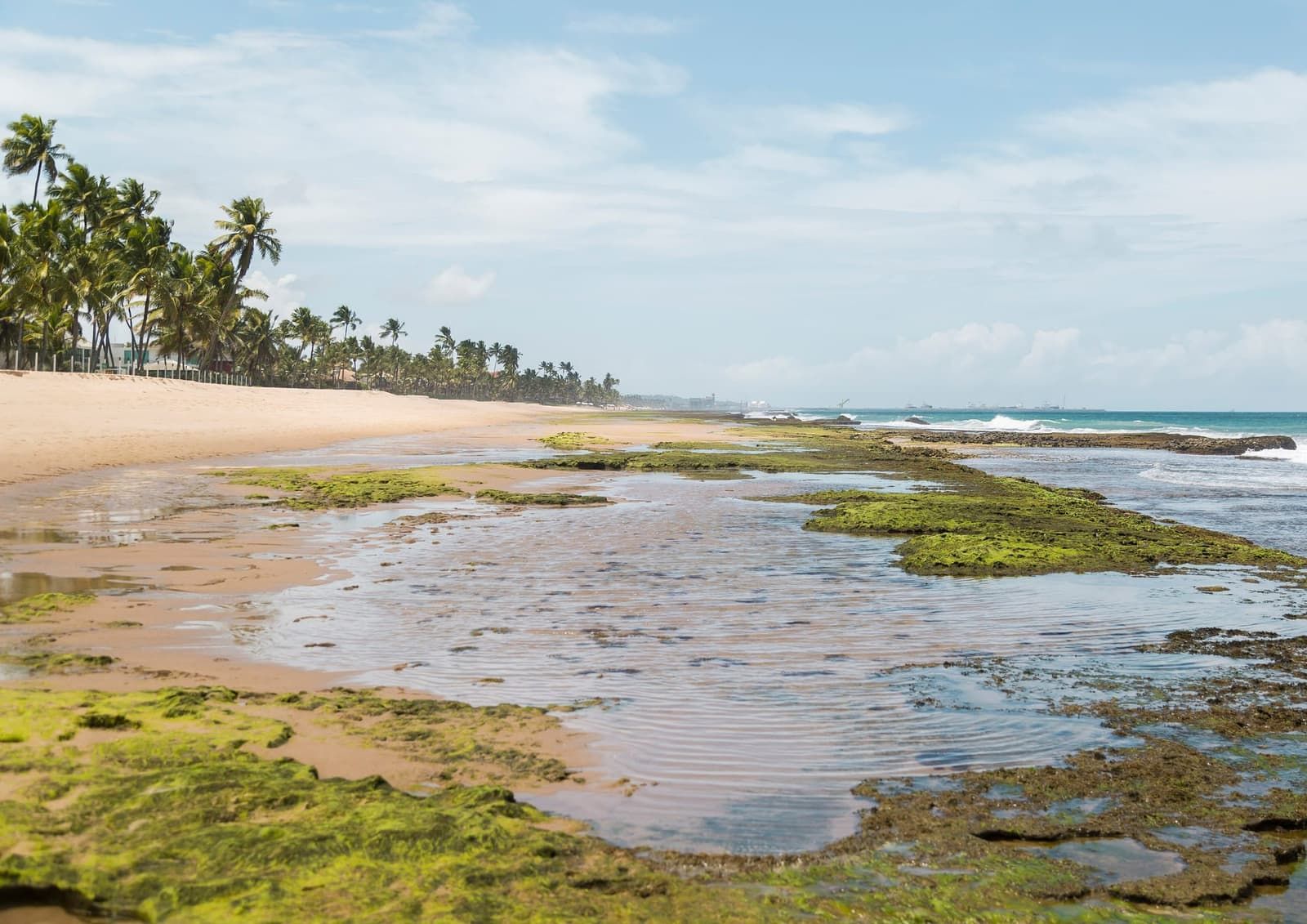
The main outing in Porto de Galinhas, the natural pools, depends on the tide. Ipojuca City Hall (Ipojuca is the municipality Porto de Galinhas belongs to) recommends visiting at low tide, preferably in the morning, and checking the tide table beforehand. This guide explains how to read the table and where to find the official forecast.
Today's tide in Porto de Galinhas
Tide planner for your trip
Enter your dates to see, day by day, the lowest daytime tide, whether it is good for the natural pools and what time to arrive.
Official Brazilian Navy (CHM) forecast for the Port of Suape, 2026, in Brasília time (UTC−3). The “now” height is an estimate between the tides in the table. official PDF. Guide's criteria (not official): up to 0.3 m excellent; up to 0.5 m good; above that, deeper water. Arrive 1.5 to 1 hour before the lowest tide.
What a tide table is
A tide table is the day-by-day forecast of the times and heights of high and low tides at a reference port. In Brazil, the official forecast is produced by the Navy’s Hydrography Center, part of the Directorate of Hydrography and Navigation (DHN). The Navy publishes the annual tables on its website, covering many ports along the Brazilian coast.
On the Pernambuco coast the tide is semidiurnal: there are generally two high tides (preamar in Portuguese) and two low tides (baixa-mar) each day. The times move forward a little from one day to the next.
How to read the table, step by step
- Choose the reference port. Porto de Galinhas does not appear as a station of its own in the official forecast. Use the nearest port listed by the Navy in Pernambuco, such as Suape, or Recife.
- Find the day. Each day has roughly four lines: two high tides and two low tides.
- Separate time and height. Next to each time is the tide height, in meters.
- Identify low tide. These are the lines with the lowest values of the day. Very low values, sometimes close to zero or negative, mean a very low tide.
- Choose a morning low tide. That is Ipojuca City Hall’s recommendation for the pools.
| Term | Meaning |
|---|---|
| Preamar (high tide) | The highest point of the cycle |
| Baixa-mar (low tide) | The lowest point of the cycle |
| Altura / height (m) | Forecast water level relative to a technical reference for the port |
| Spring tide (maré de sizígia) | Tides with the greatest range, around the full moon and new moon |
| Neap tide (maré de quadratura) | Tides with the smallest range, around the first and last quarter moons |
Moon phases and low tide
The Moon and the Sun pull on the ocean’s waters. At full moon and new moon, the two forces add up and tides become more extreme: high tide rises higher and low tide drops lower. These are spring tides, usually the best for the natural pools.
Around the first and last quarter moons, the range is smaller. Low tide does not drop as far, and the pools may be deeper or have less reef exposed.
In practice: when planning your trip, look at the lunar calendar and then confirm in the tide table. See also when to go to combine tides and weather.
Using the tide table on the day
- Arrive before the lowest tide. The jangada (traditional raft boat) ride usually leaves while the tide is still going out. Agree on the time with the jangadeiros. See the jangada boat ride.
- Watch the weather. Heavy rain in the days before and wind can cloud the water, even with a good tide.
- Listen to the people on the beach. Jangadeiros and lifeguards assess the actual conditions. The tide table is a forecast, not a guarantee.
- Remember that the tide comes back. After low tide, the water rises again. Do not get stranded on top of the reef.
Tides matter beyond the pools
Other outings in the area also depend on the tide. Some beaches have only a narrow strip of sand at high tide, and seahorse watching in Maracaípe takes place in the estuary, where the water level varies. Before you go, check the tide table and ask local operators. More practical tips in travel tips.
Where to check
- Brazilian Navy, Hydrography Center: the “Tábuas de Maré” (Tide Tables) page, with the official annual publication.
- DHN, Tide Forecasts: the forecast section of the Directorate of Hydrography and Navigation.
- Tide apps and websites: handy on your phone, but confirm the reference port and compare with the official source.
Attractions mentioned
-
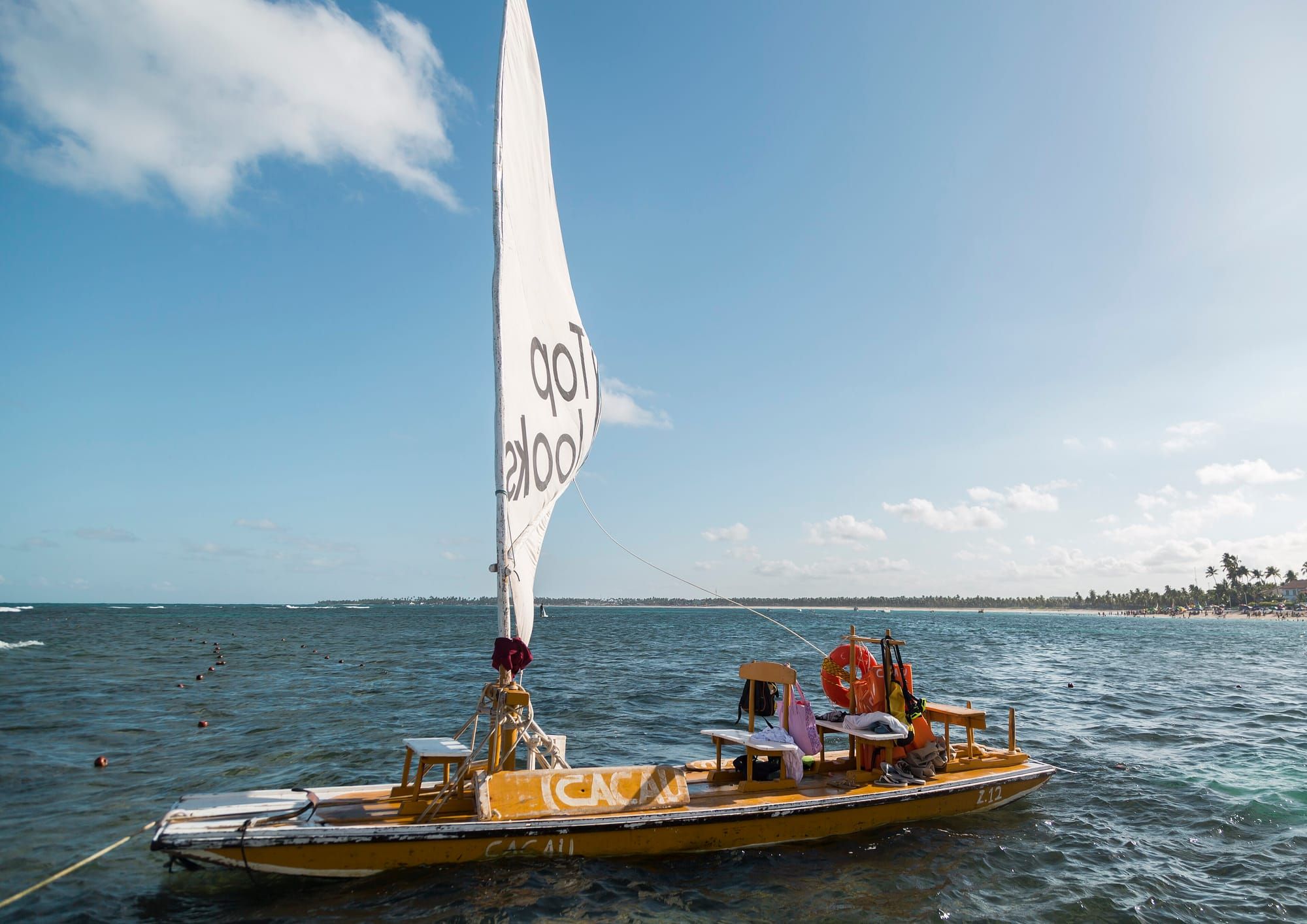 Tide-dependent Natural pools Porto de Galinhas village Porto de Galinhas Natural Pools The pools appear between the reefs at low tide, right off the village. The usual way to reach them is by jangada (traditional raft boat) with accredited boatmen. See details
 - PaidKidsTide-dependent Tour Porto de Galinhas village Jangada boat ride The jangada takes you from the shore to the natural pools. Buy at the ticket booth or on the Jangadeiros Association website, always according to the tide. See details
Frequently asked questions
Which port should I use in the tide table for Porto de Galinhas?
The official Navy forecast does not list Porto de Galinhas as a station of its own. Use the nearest reference port listed by the Navy on the Pernambuco coast, such as Suape, or Recife, bearing in mind that local times may differ by a few minutes.
What tide height is good for the natural pools?
The lower the low-tide value, the more of the reef is exposed. There is no official cut-off number. If in doubt, ask the accredited jangadeiros (raft boatmen) on the day; they assess the actual conditions.
Why does the tide time change every day?
Because the tide mainly follows the Moon. On the Pernambuco coast there are two high tides and two low tides a day, and the times shift a little each day.
Can I trust tide apps?
Many apps reproduce the Navy forecast, but they may use the wrong reference port or time zone. If in doubt, check the official publication of the Navy's Hydrography Center.
Keep reading
Keep planning
-
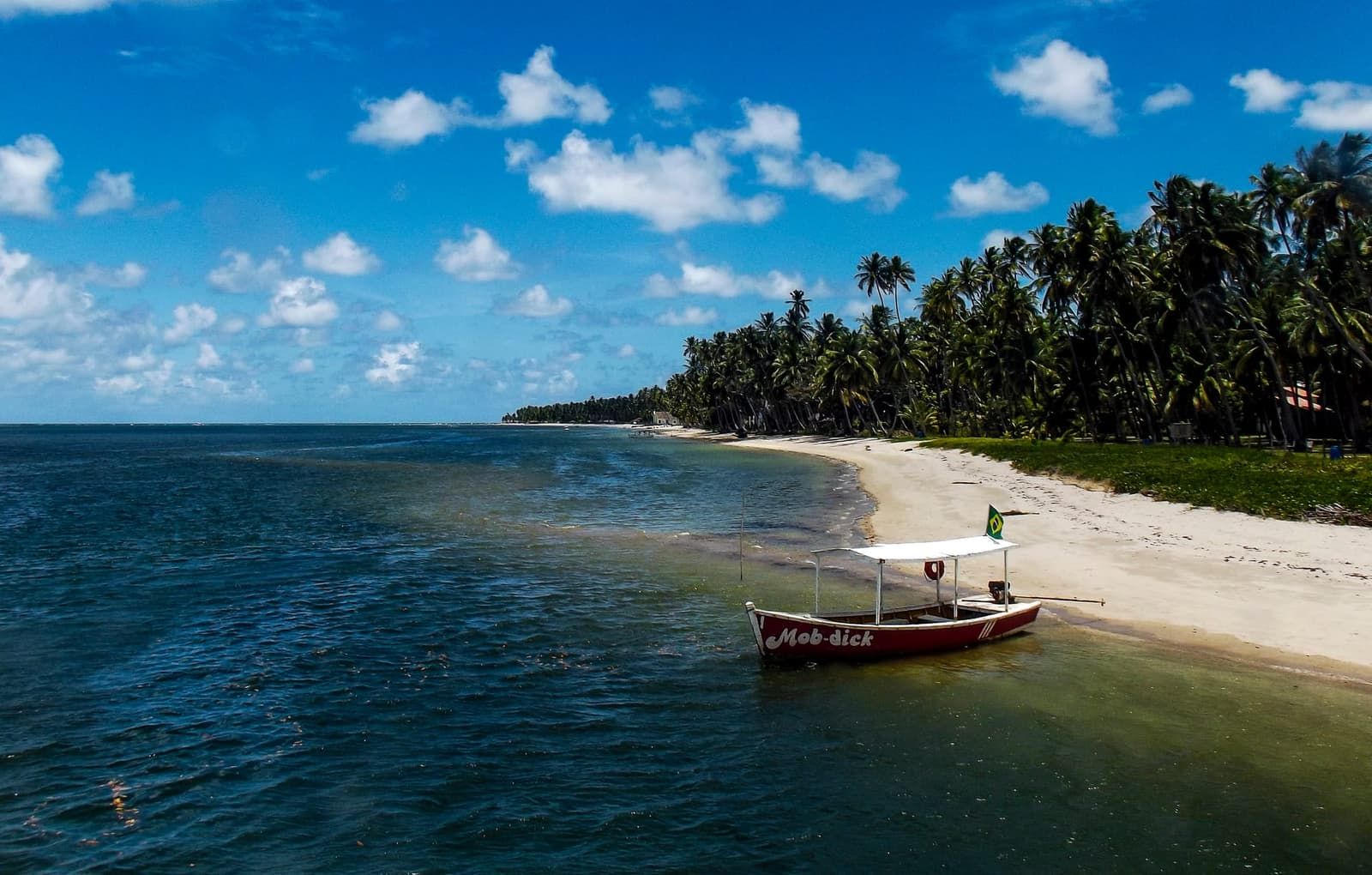 When to go to Porto de Galinhas: weather, rain and tides September to March is usually drier; April to July brings most of the rain. But it is the tide that rules the trip to the pools. Read guide
 -
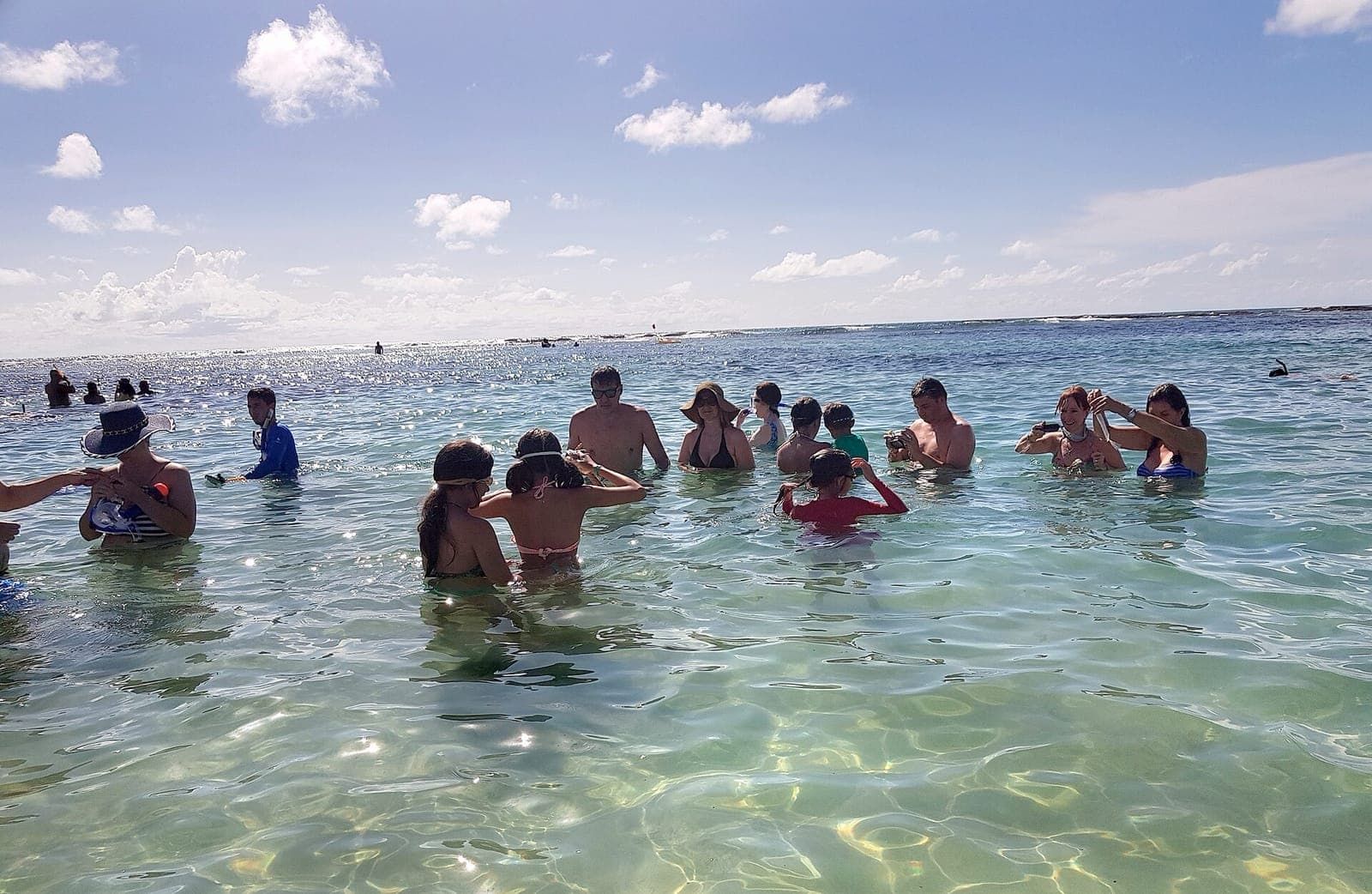 Safety in Porto de Galinhas: sea, reefs, sun and town What to watch out for in the sea, in the natural pools and on the sand, and what official sources say about sharks on the Pernambuco coast. Read guide
 -
 Porto de Galinhas travel tips Practical advice to enjoy more and spend less: tides, beach, transportation, money and reef care. Read guide