Plan
Safety in Porto de Galinhas: sea, reefs, sun and town
What to watch out for in the sea, in the natural pools and on the sand, and what official sources say about sharks on the Pernambuco coast.
Updated on October 5, 2026 ✓ Information checked on October 5, 2026 adapted from the Portuguese original
Porto de Galinhas has a calm sea much of the time, sheltered by its line of reefs. That doesn’t eliminate risks. This guide brings together what official sources advise about the sea, the reefs, the sun and precautions in the village.
In the sea: currents and flags
- Swim near lifeguards and ask where it’s safest to go in.
- Respect the flags. A red flag means danger. Don’t go in.
- Rip currents pull water from the shore out to sea. If you’re caught in one, don’t swim against it. Swim parallel to the beach until you’re out of the current and call for help.
- Open-sea beaches and surf areas, such as Maracaípe, have stronger waves and currents than the beach in front of the village.
- Stay out of the sea at night, after drinking or alone.
In the natural pools and on the reefs
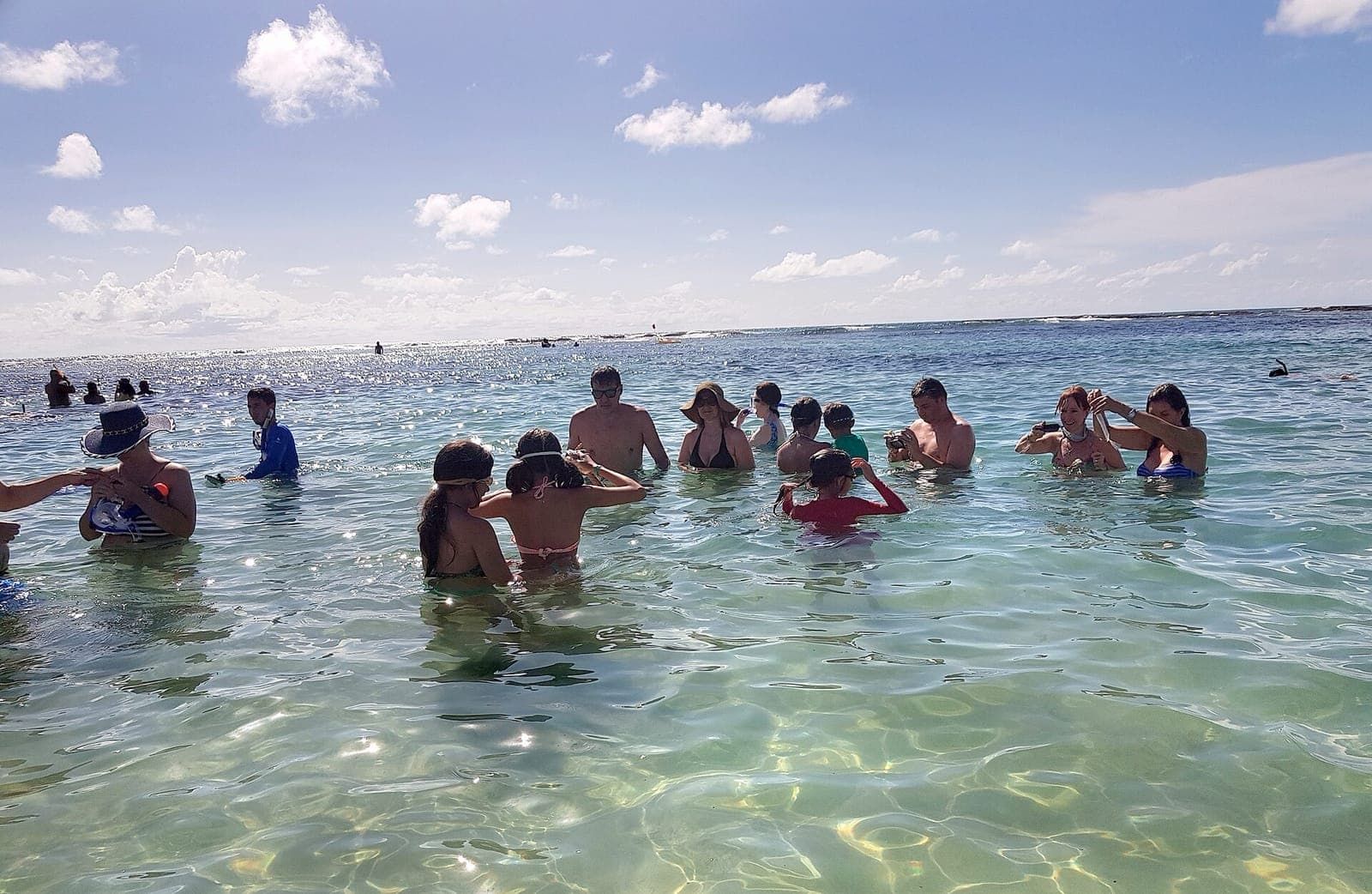
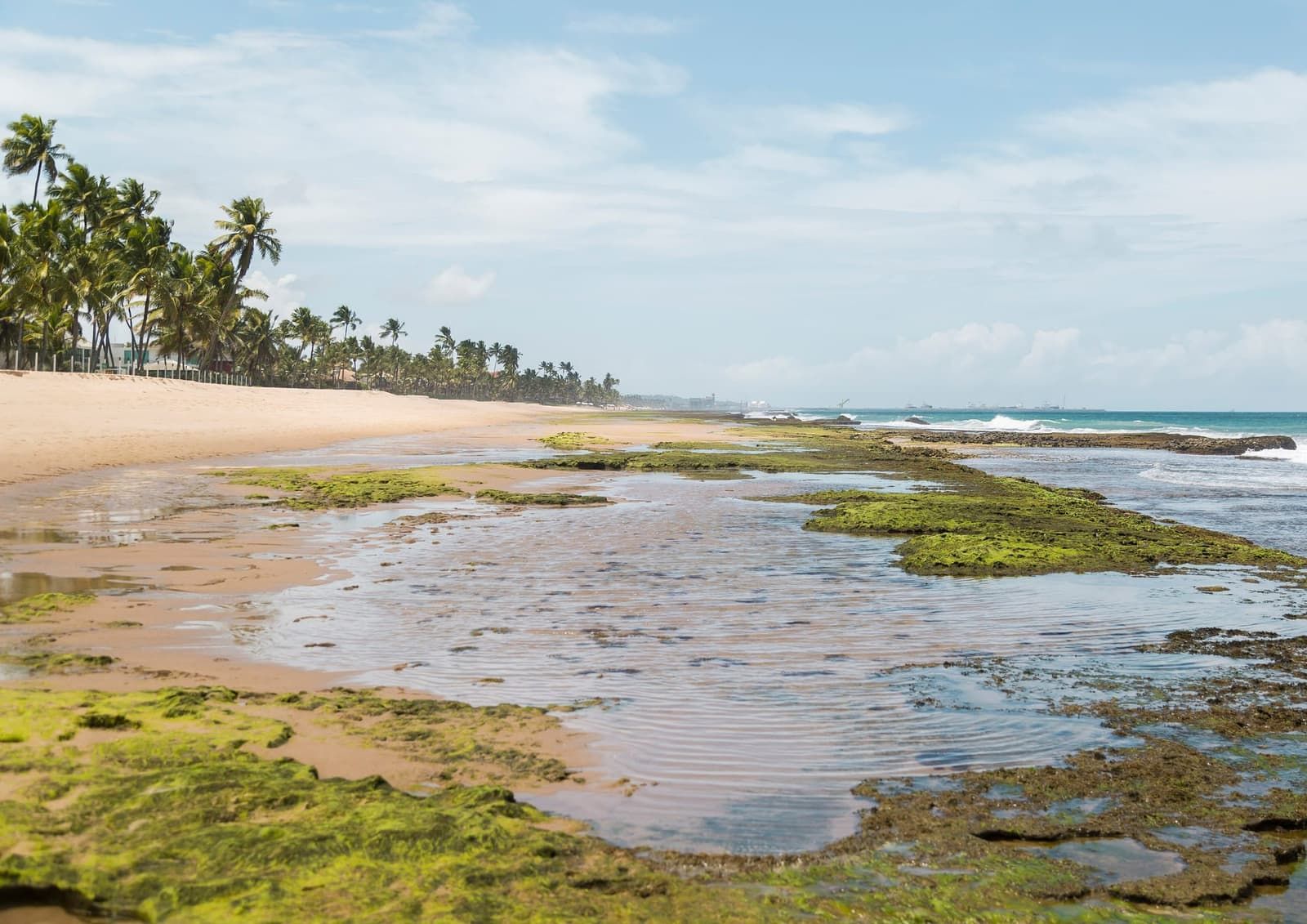
The natural pools appear at low tide. They look like a shallow aquarium, but they call for attention:
- Corals cut. Wear proper footwear and don’t step on live corals. Ipojuca City Hall asks that no one step on or touch the corals.
- The tide comes back. After low tide, the water rises. Stick to the return time agreed with the jangadeiro.
- There are deep areas between the reef blocks.
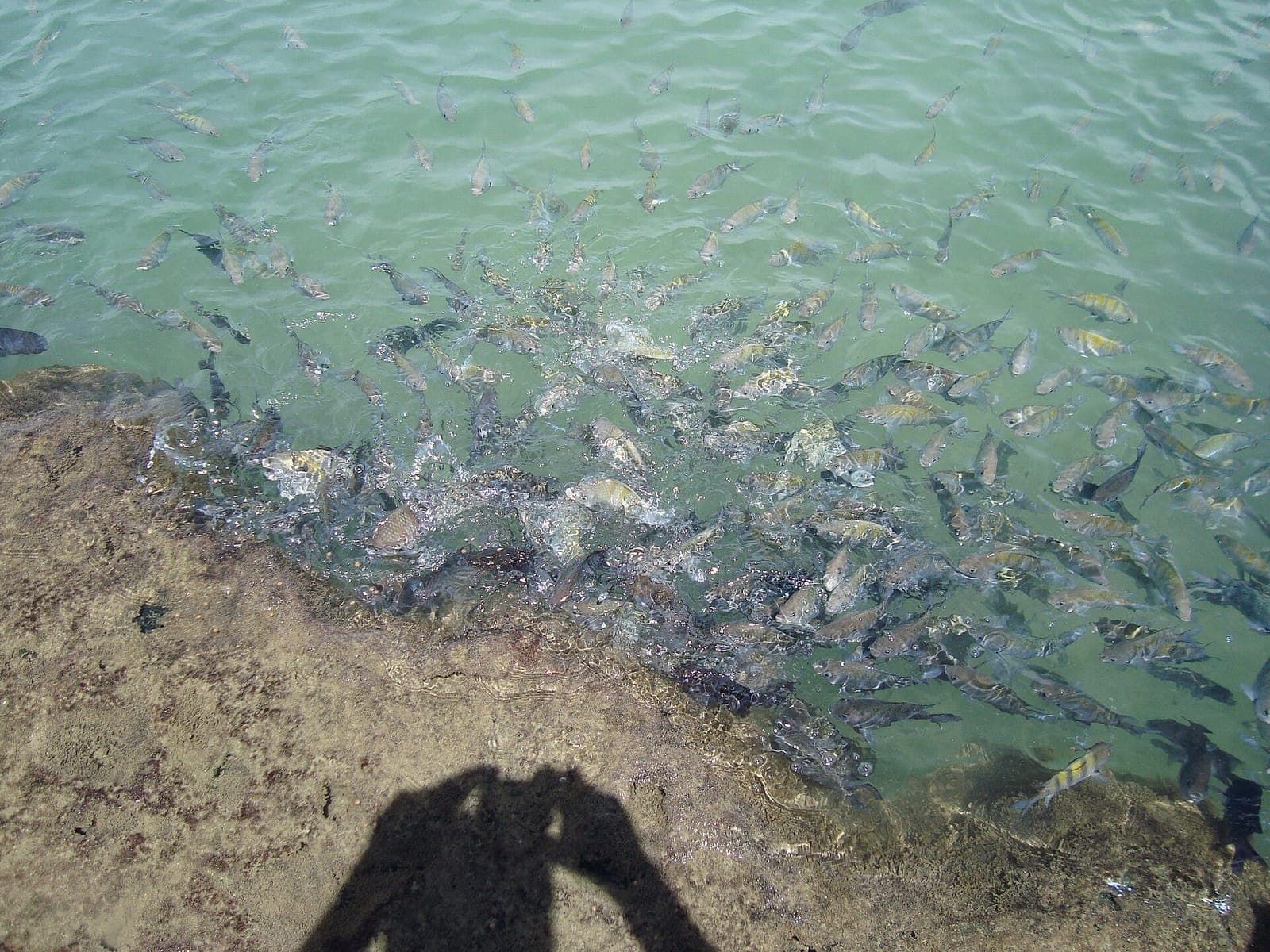
- Don’t feed the fish, as City Hall advises.
- Children should always be within arm’s reach of an adult, preferably wearing a life jacket.
To choose the right time, see the tide table.
Where swimming is easy and where it calls for care
The Pernambuco Fire Department advises choosing reef-sheltered natural pools at low tide and avoiding swimming at high tide, when currents get stronger, according to Diario de Pernambuco. Beach by beach:
| Beach | Sea conditions | Best for |
|---|---|---|
| Muro Alto | Reef wall forms a calm-water pool; best at low tide (Ipojuca City Hall) | Small children and older people, with supervision |
| Village natural pools | Shallow at low tide, with corals, sea urchins and deep areas around them | Everyone, following the jangadeiro |
| Village beach | At high tide, an ordinary swimming beach | Swimming near lifeguards |
| Pontal do Cupe | Shallow natural pool at low tide; at high tide the strip of sand almost disappears and waves may form (Melhores Destinos) | Families, only at low tide |
| Cupe, central stretch | Open sea and strong waves (Wikipedia); recorded drownings and signposted rip currents (Folha de Pernambuco) | Strong swimmers only, in a supervised stretch |
| Merepe | Open sea, with waves | Swimming with attention to the flags |
| Maracaípe | Waves for surfing and competitions (Ipojuca City Hall) | Surfers; swimmers only with caution |
| Pontal de Maracaípe | Where river meets sea; the current changes with the tide | Jangada ride; swimming only with local guidance |
| Serrambi | One side sheltered by reefs, the other open sea | The reef side, at low tide |
| Gaibu, in Cabo | Wave and surf beach (Wikipedia) | Swimming near lifeguards |
According to Folha de Pernambuco, there are rip currents at several points along the Ipojuca coast, not just in Cupe, and the dangerous areas are signposted. When you arrive, find the lifeguard station and ask where it’s best to go in. According to the same newspaper (Aug 2024), Salvamar lifeguards start at 5:30 a.m. and end their patrol at 5 p.m.: outside those hours, don’t count on supervision.
Footwear, reefs and sea urchins
Ipojuca City Hall asks that no one step on or touch the corals. As well as protecting the reefs, that protects you:
- Sea urchins live in the pools that form at low tide between rocks and reefs. According to Unesp material (Botucatu Medical School), when stepped on, their spines break and penetrate deep into the skin. The person should rest, without putting weight on the injured foot, and seek medical care to have the spines removed.
- Corals and reefs are rough and cut.
- Don’t touch animals washed up by the waves, the same material advises.
Editor’s recommendation: bring neoprene water shoes or closed water footwear for the pools, Muro Alto and Pontal do Cupe. Wear them to get in and out of the water, but not to walk on live corals. Near the reefs, float with a mask rather than standing up.
Sharks: what official sources say
The Pernambuco state government runs CEMIT, the State Committee for the Prevention of Shark Incidents. According to SEMAS-PE, in a September 2023 publication, a 33 km stretch between Farol Beach, in Olinda, and Paiva Beach, in Cabo de Santo Agostinho, is considered an attention area. In that stretch, State Decree 21,402/1999 prohibits water sports.
Porto de Galinhas is in Ipojuca, south of that stretch, and does not appear in the area described by SEMAS-PE. That is no absolute guarantee. CEMIT’s general safe-swimming recommendations still apply on any beach:
| Avoid | Prefer |
|---|---|
| Open sea and deep water | Reef-sheltered areas |
| Dawn and dusk | Full daylight hours |
| River mouths and murky water | Clear, calm water |
| High tide | Lower tides |
| Swimming alone, after drinking or while bleeding | Swimming with company and near lifeguards |
| Shiny objects | Discreet accessories |
Sun and heat
INCA recommends avoiding the sun between 10 a.m. and 4 p.m. and wearing a hat, sunglasses, clothing that covers the skin and sunscreen. On the beach, reflection from the water and sand increases exposure. Drink water throughout the day, especially on buggy and jangada rides.
In the village and on the beach
Urban safety in Porto de Galinhas follows the logic of any busy tourist destination:
- don’t leave your phone, wallet or camera unattended on the sand;
- take only what you need to the beach;
- at night, stick to busy, well-lit streets;
- use a taxi, ride-hailing app or transport arranged with your accommodation to get back late;
- park in regulated locations.
In December 2025, after an assault on tourists at a beach stall, Ipojuca City Hall announced a stronger Municipal Guard presence on the beachfront and enforcement against tie-in sales, minimum spends and informal parking attendants (flanelinhas). Agree on prices before ordering and, if there’s any problem, contact the Municipal Guard or the police.
In an emergency
Brazil’s national emergency numbers for the Military Police, SAMU (ambulance service) and the Fire Department work throughout the country, including Ipojuca. On the beach, the quickest option is usually to call the nearest lifeguard or Municipal Guard. Save your accommodation’s address on your phone.
Traveling with family? See specific precautions in Porto de Galinhas with kids. For the jangada, buggies and beach stalls, see how to avoid tourist traps in Porto de Galinhas. More practical advice is in travel tips.
Frequently asked questions
Are there sharks in Porto de Galinhas?
The stretch that CEMIT, a Pernambuco state government committee, treats as an attention area runs from Farol Beach, in Olinda, to Paiva Beach, in Cabo de Santo Agostinho, according to SEMAS-PE. Porto de Galinhas, in Ipojuca, lies south of that stretch. Even so, follow the general safe-swimming advice and the lifeguards' instructions.
Is it dangerous to swim in the natural pools?
At low tide and with a calm sea, the pools are shallow, but there are sharp corals, deep areas around them and the tide comes back in. Follow the jangadeiros (jangada boatmen), wear proper footwear and don't stray from the group.
What should I do if I'm caught in a rip current?
Stay calm, don't swim against the current, swim parallel to the beach until you're out of it and signal for help. Whenever possible, swim near a lifeguard station.
Is Porto de Galinhas safe for tourists?
It is an established tourist destination, with a municipal guard presence on the beach, according to Ipojuca City Hall. As in any busy place, there are risks of theft and occasional conflicts. Simple precautions greatly reduce those risks.
Which beach has the calmest sea for children and older people?
Muro Alto, where the reef wall forms a calm-water pool that Ipojuca City Hall considers ideal for small children. At low tide, the village pools and Pontal do Cupe are also calm. Avoid careless swimming in the middle of Cupe and in Maracaípe, which have open sea and waves.
Do I need water shoes in Porto de Galinhas?
Editor's recommendation: yes, neoprene water shoes or closed water footwear. The reefs cut and there are sea urchins in the pools between the rocks. According to Unesp material, sea urchin spines break off inside the skin and should be removed at a health facility.
Keep reading
Keep planning
-
 Porto de Galinhas tide table: how to read it and where to check Understand high tide, low tide and tide height, and use the official Navy forecast to choose your day for the natural pools. Read guide
 - How to avoid tourist traps in Porto de Galinhas: jangada, buggy, beach stalls and tides What the flyers don't tell you: where to buy the official jangada ride, how to hire a buggy, what beach stalls can and can't charge, when the pools aren't worth it and where to complain. All sourced. Read guide
-
 Porto de Galinhas travel tips Practical advice to enjoy more and spend less: tides, beach, transportation, money and reef care. Read guide