- Type
- Natural pools
- Area
- Porto de Galinhas village
- Depends on the tide
- Yes
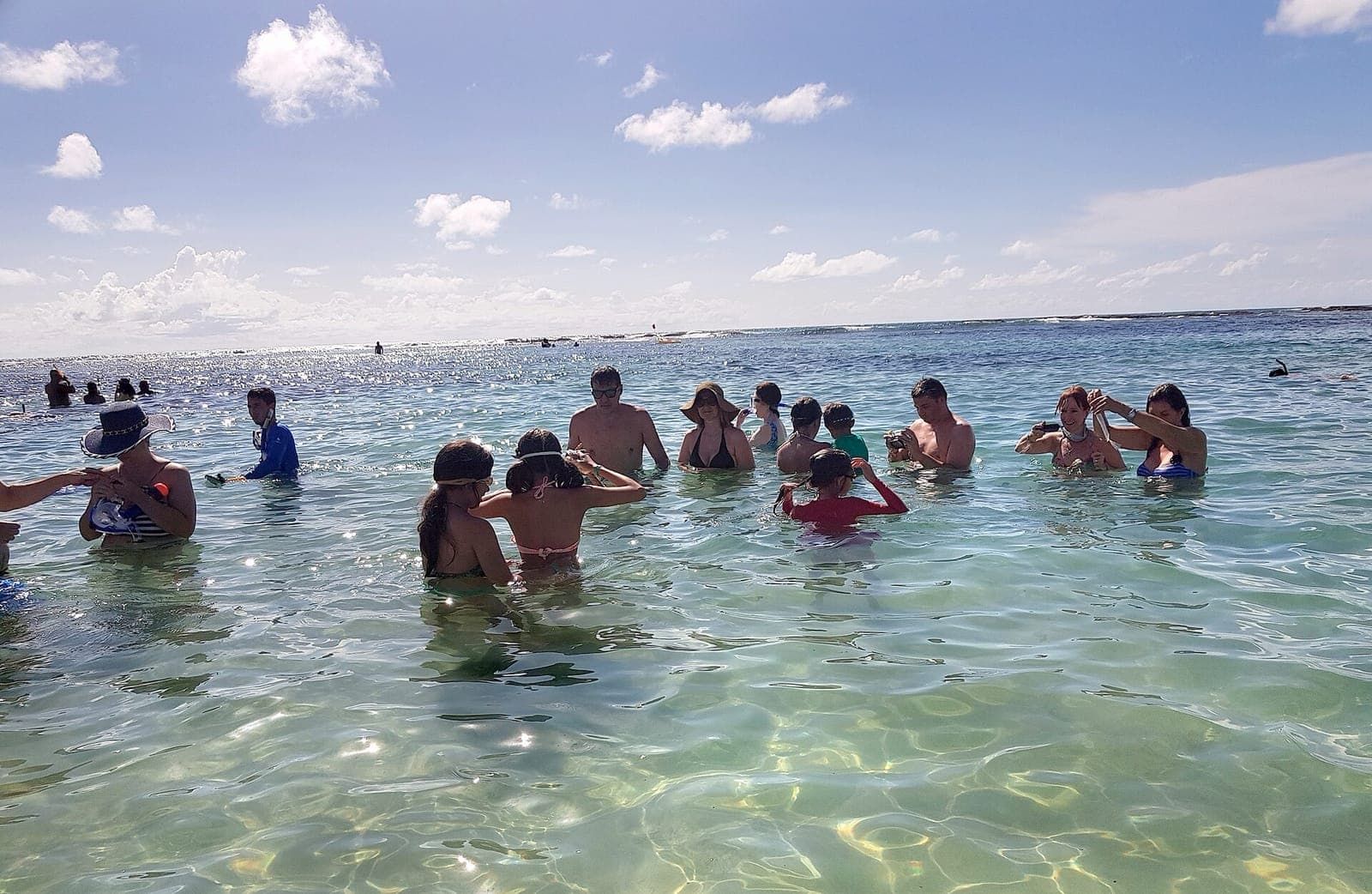
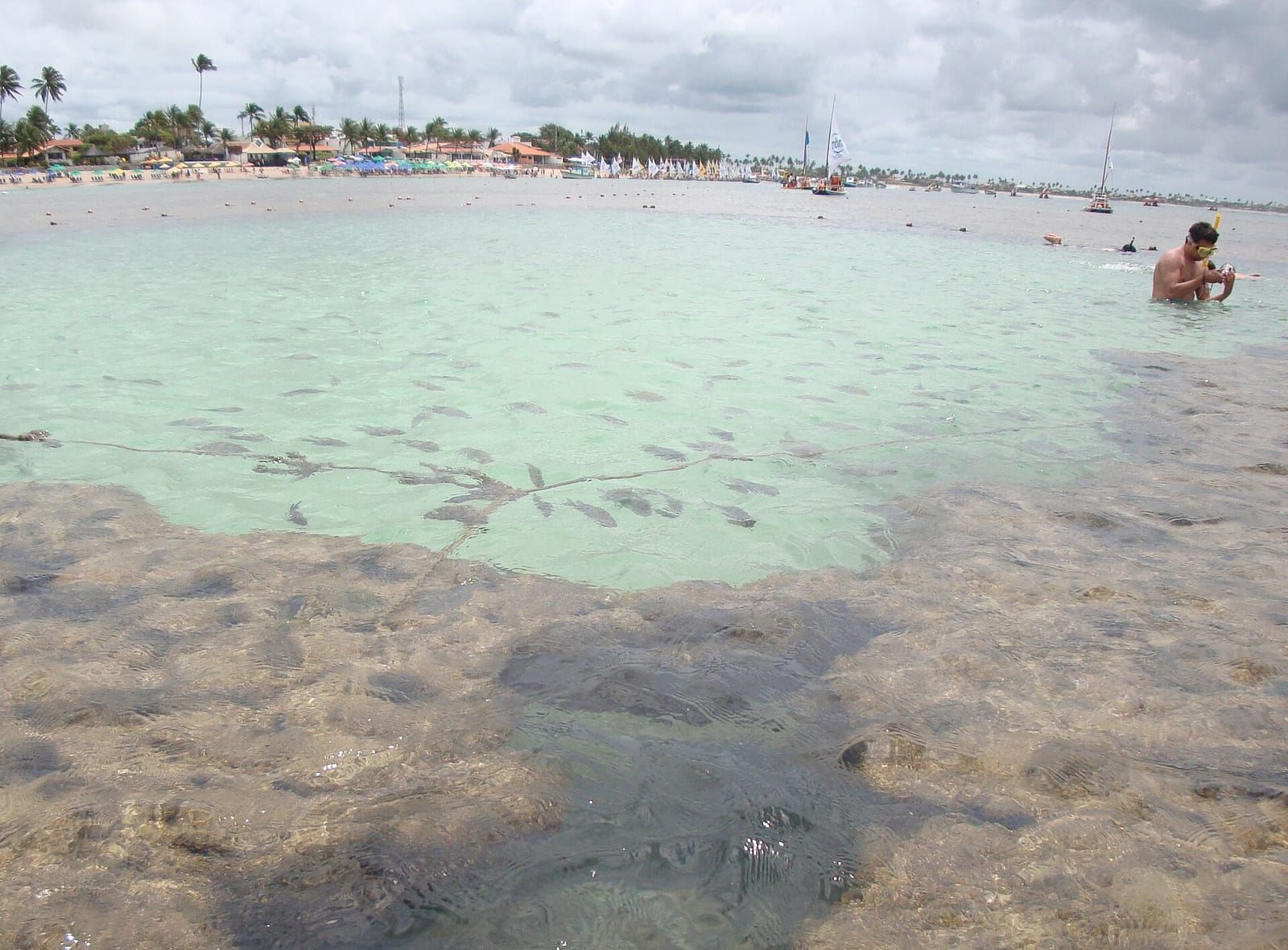
The Porto de Galinhas natural pools are pockets of warm, clear water that form between the reefs off the village when the tide goes out. According to Ipojuca City Hall (Ipojuca is the municipality; Porto de Galinhas is its best-known beach village), they are the destination’s main attraction, and the reason many people plan their whole trip around the tide table.
How the pools form
A line of reefs runs along the coast a short distance from the beach. At high tide, the sea covers everything. At low tide, the reefs emerge and trap pockets of shallow water where you can see colorful fish and coral. Ipojuca City Hall describes the water as warm and crystal clear and points to low tide, especially in the morning, as the best time.
To find the time, use the Brazilian Navy tide table, which publishes forecasts for Porto de Suape, the nearest official station. The lower the forecast tide, the more exposed the pools are. Learn how to read the table in the Porto de Galinhas tide table.
Today's tide in Porto de Galinhas
Official Brazilian Navy (CHM) forecast for the Port of Suape, 2026, in Brasília time (UTC−3). The “now” height is an estimate between the tides in the table. official PDF. Guide's criteria (not official): up to 0.3 m excellent; up to 0.5 m good; above that, deeper water. Arrive 1.5 to 1 hour before the lowest tide.
How to get to the pools
The most common way is by jangada, the traditional raft boat of Brazil’s northeastern coast, which takes you from the shore to the reefs. Tickets are sold at the official Jangadeiros Association booth, around Rua das Piscinas Naturais, and on the association’s website. The step-by-step guide to buying is in jangada boat ride.
Who it suits
- First-time visitors: it is the destination’s most popular outing and is right off the main beach.
- Families: the association charges half price for children aged 4 to 6 and nothing up to age 3. Even so, the water over the reefs calls for constant attention with little ones.
- Reduced mobility: in June 2026, Ipojuca City Hall resumed the Praia Sem Barreiras project, with an amphibious wheelchair, beach access mats and assisted jangada rides, all free.
Environmental rules and care
The sea off Porto de Galinhas is inside the Serrambi Reefs Marine Environmental Protection Area, a state conservation unit created in 2018 and managed by the state environmental agency CPRH. The reefs are alive and fragile. Ipojuca City Hall asks you to:
- not step on or touch the coral;
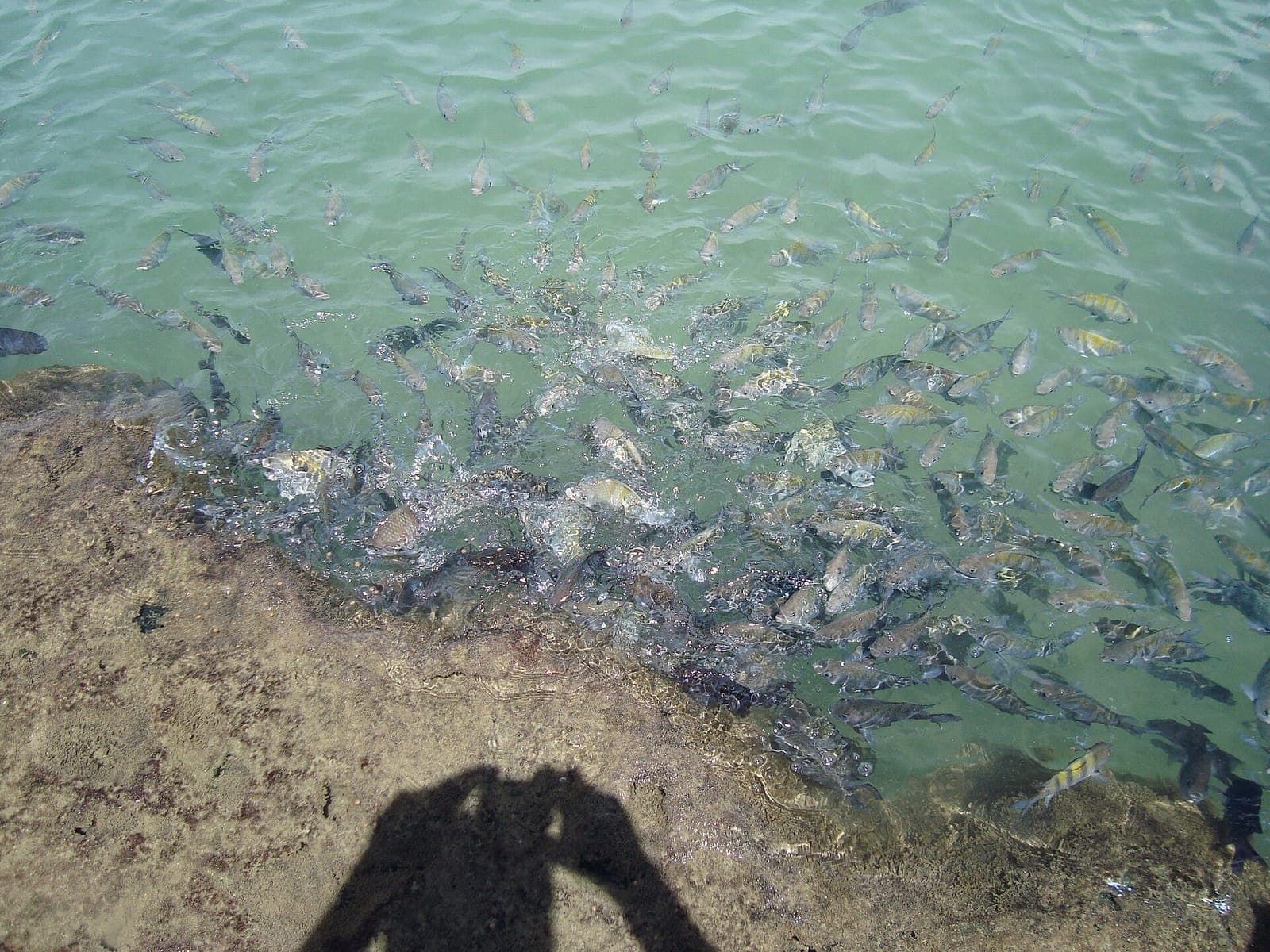
- not feed the fish;
- pick up your trash;
- follow the instructions of guides and jangadeiros (raft boatmen).
Even if someone offers you fish food or bread to attract fish, say no: the official guidance is not to feed them.
How to fit it into your itinerary
Schedule the pools for the first low-tide morning of your trip. If the week’s tides do not cooperate, swap the order of your days and use high tides for other beaches or the village. The 3-day itinerary is already built on this logic.
Prices, rules and times may change. Check the Navy tide table and the official channels before you go.
Photos
Practical tips
- Pick your day using the tide table: no low tide, no pools.
- Buy the ride at the official Jangadeiros Association booth or on the association's website.
- Do not step on the coral and do not feed the fish, as Ipojuca City Hall asks.
- Bring a snorkel mask, sunscreen applied in advance and a bottle of water.
- Leave valuables at the hotel: the jangada is small and you will be getting in the water.
Frequently asked questions
What is the best tide for the Porto de Galinhas natural pools?
Low tide. Ipojuca City Hall recommends going at low tide, preferably in the morning. Times and heights are in the Brazilian Navy tide table, at the Porto de Suape station.
How much does the jangada ride to the pools cost?
According to the Porto de Galinhas Jangadeiros Association website, in Oct 2026: BRL 60 (Brazilian reais) per person from age 7 in cash or Pix (BRL 63 by card), BRL 30 for ages 4 to 6 (BRL 33 by card) and free up to age 3. Confirm before buying.
How long does the trip to the pools take?
About an hour, according to the Jangadeiros Association, including the jangada ride and the stop at the pools.
Can people with disabilities visit the pools?
In June 2026, Ipojuca City Hall resumed the Praia Sem Barreiras (Beach Without Barriers) project, with amphibious wheelchairs, beach access mats and assisted jangada rides, free of charge. Confirm days and times with the city hall.
Combine with
-
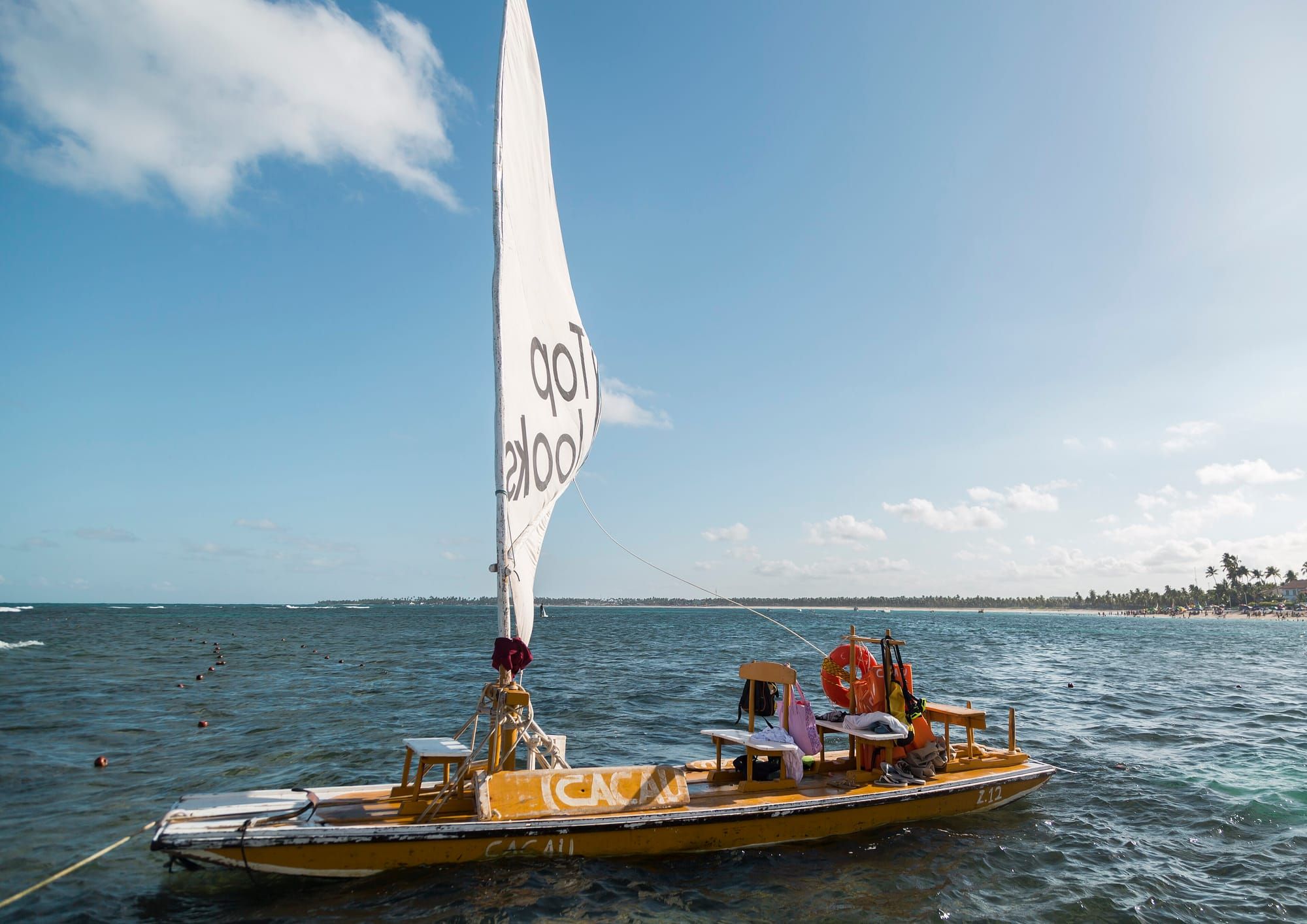 PaidKidsTide-dependent Tour Porto de Galinhas village Jangada boat ride The jangada takes you from the shore to the natural pools. Buy at the ticket booth or on the Jangadeiros Association website, always according to the tide. See details
 -
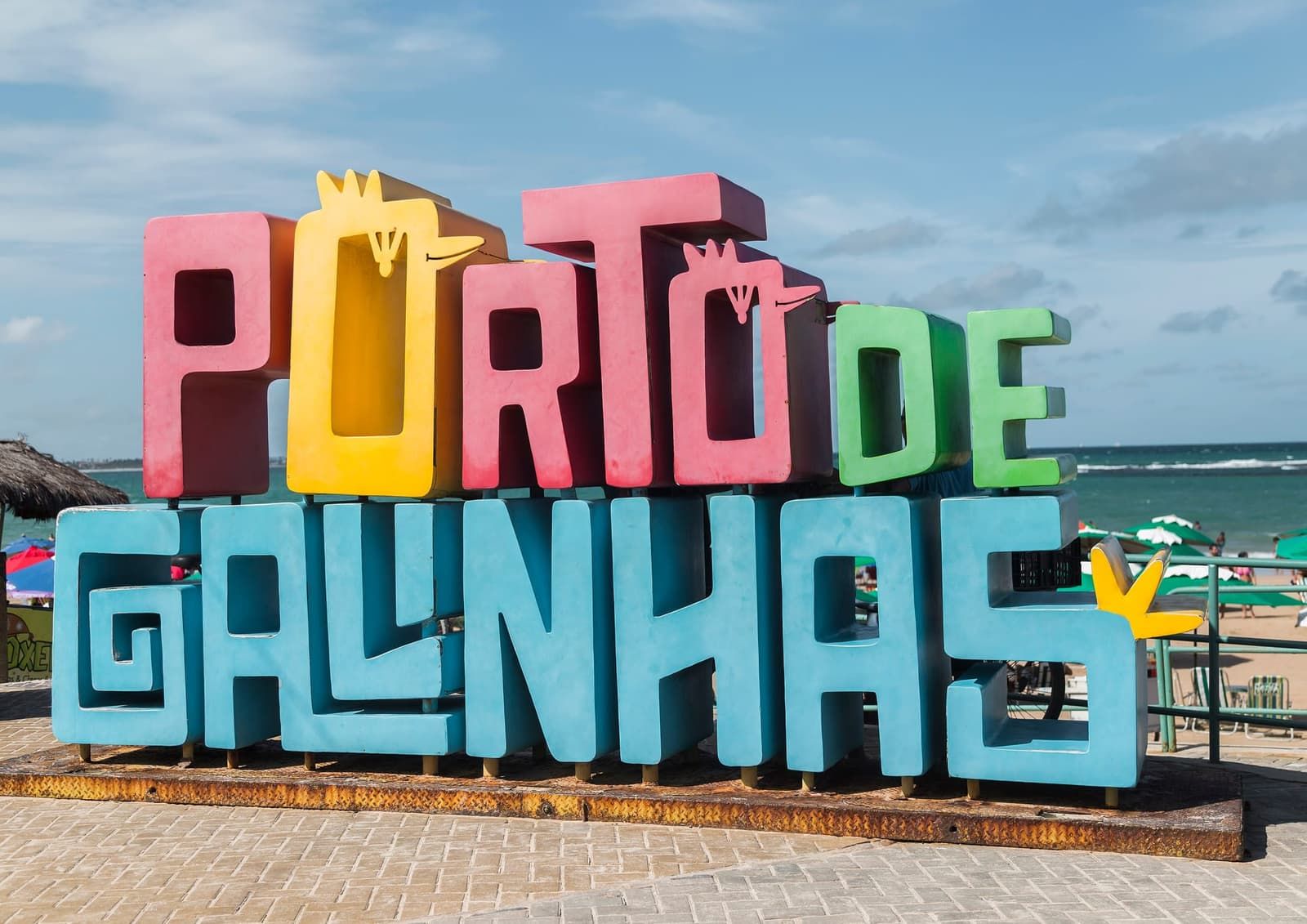 Free accessTide-dependent Beach Porto de Galinhas village Porto de Galinhas Beach The village's main beach and the departure point for jangada boats to the natural pools. It runs on the tide's rhythm: plan your day with the tide table. See details
 -
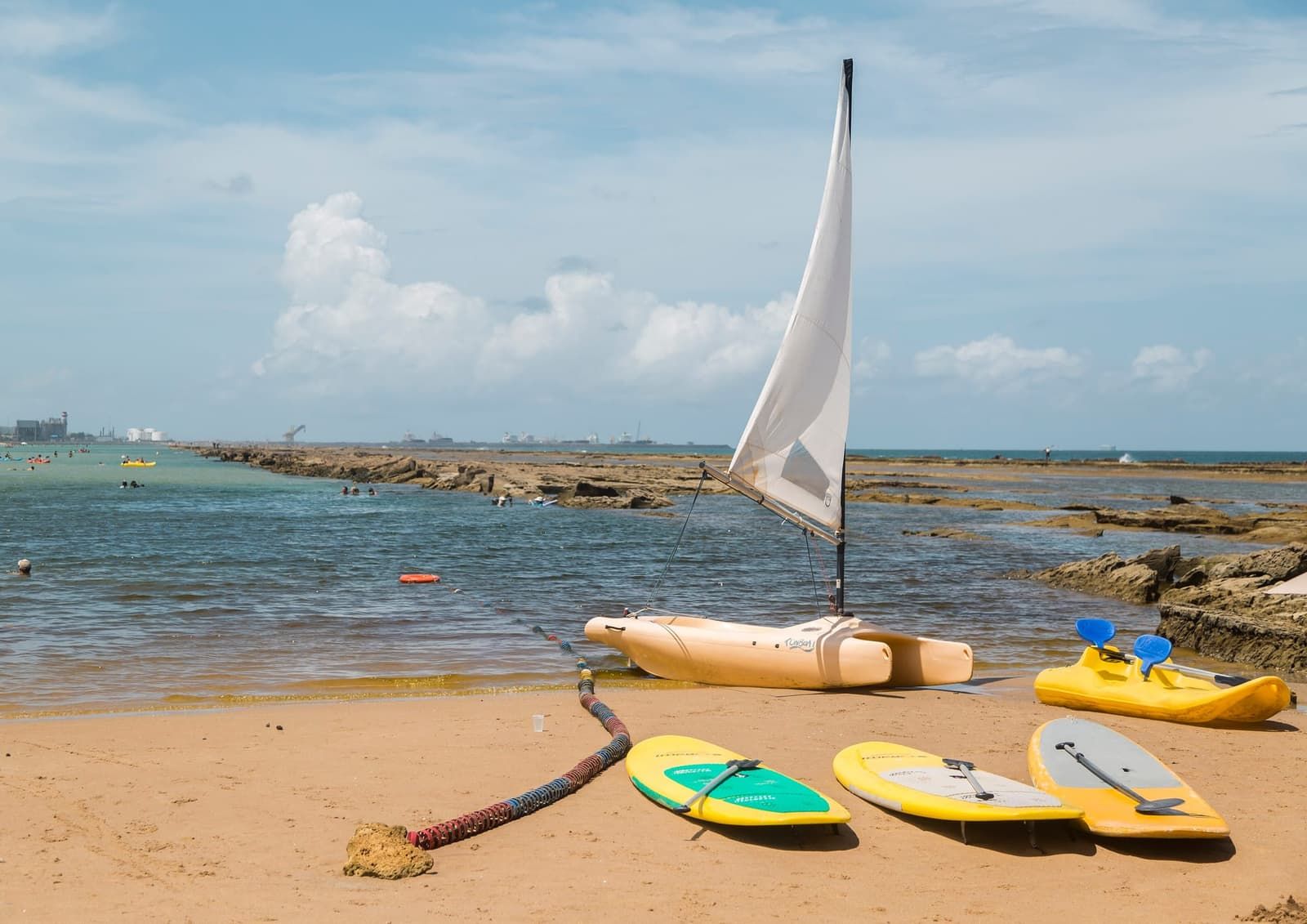 Free accessKidsTide-dependent Beach North coast of Ipojuca Muro Alto Beach The wall of reefs that gives the beach its name holds back the waves and creates a natural pool of calm, warm water about 3 km long. It is the reason many people make the trip. See details